

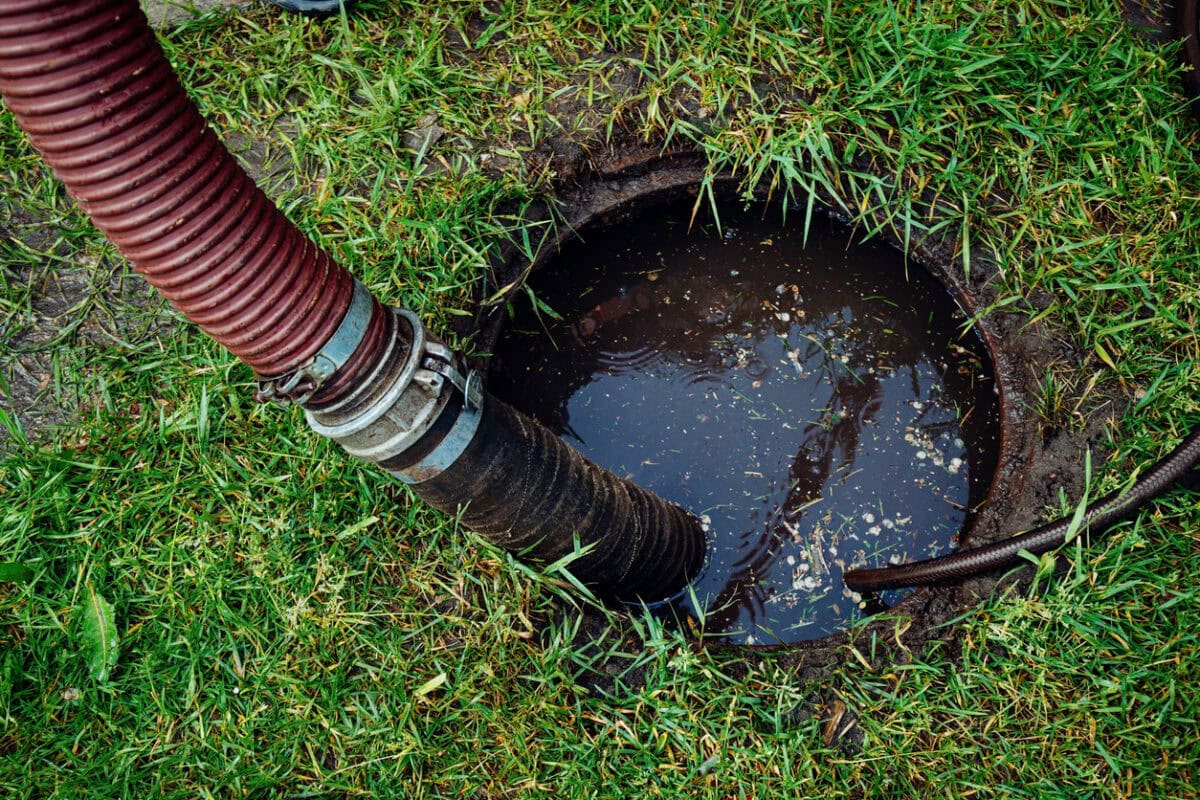
Will a Flooded Septic Tank Fix Itself? A Northern Virginia Homeowner’s Guide
After a heavy rain, it’s common to find standing water pooled over your septic tank or drain field. The question homeowners across Northern VA ask next is simple: will it just fix itself once the ground dries out? The short answer is almost never — and treating it that way can turn a manageable problem into a much more expensive one.
Key Takeaways
- Rarely self-resolving. A flooded septic tank almost never fixes itself. The drain field has to dry out first, and the tank typically still needs to be pumped afterward.
- Rain overwhelms the drain field, not the tank. Heavy or prolonged rain saturates the soil around the drain field faster than it can absorb effluent, so wastewater backs up into the tank and sometimes into the house.
- Watch for these signs: standing water over the tank or drain field, sewage odor, slow or gurgling drains, and sewage backing up into sinks, tubs, or toilets.
- Northern Virginia’s soil makes it worse. Much of the region — from Loudoun and Fauquier County out to Prince William County — sits on clay-heavy soil that drains far slower than sandy soil, so flooding here tends to linger and repeat with each storm.
- Waiting it out is risky. Sewage backups, drain field damage, well and yard contamination, and costly repairs are all more likely the longer a flooded system goes untreated.
- The real fix: stop using water in the house right away, let the ground dry, then have the tank professionally inspected and pumped rather than just waiting to see what happens.
What Causes a Septic Tank to Flood
A drain field’s job is to let effluent filter slowly through the soil beneath your yard. That process already keeps the surrounding ground damp under normal conditions. During a heavy or extended rain event, that same soil absorbs rainwater from above at the same time it’s supposed to be absorbing wastewater from below. Once the soil is fully saturated, it has nowhere to send either one.
With the drain field unable to accept new effluent, wastewater has nowhere to go but back toward the tank and, eventually, back into your home’s plumbing. A rising water table, a system installed too close to a stream or floodplain, or a drain field that was undersized or poorly sited to begin with all make this worse.
Signs Your Septic Tank Is Flooded
- Settling around the tank. Some settling right after installation is normal. Settling that shows up later, especially after a heavy rain, often points to a flooded tank shifting the soil above it.
- Soil that stays wet. Damp, spongy ground over the drain field days after the rain has stopped usually means the field is saturated and can’t process wastewater.
- Standing water. A puddle sitting on top of the tank or drain field that won’t drain away is one of the clearest signs of flooding.
- Foul odor. A sewage smell around the septic system, especially after rain, means wastewater isn’t being filtered the way it should be.
- Slow drains or backups. Water draining slowly, gurgling, or sewage coming back up into sinks, tubs, or toilets means the tank has no room left to accept more wastewater.
So, Will It Fix Itself?
On its own, a flooded septic tank has only a slim chance of resolving without help. The ground around the tank and drain field does eventually dry out on its own timeline — but drying out isn’t the same as fixing the problem. Once the soil is dry enough for the drain field to function again, the tank still needs to be professionally pumped to remove the excess wastewater and solids that built up while it was flooded. Skipping that step just sets up the same backup the next time it rains hard.
In the meantime, cut back on household water use as much as possible. Every load of laundry, dishwasher cycle, and long shower adds more water the saturated drain field has to somehow absorb.
Why This Is Especially Common Across Northern VA
Septic flooding isn’t unique to any one town, but a few things about this region make it more frequent and longer-lasting than in areas with sandier, faster-draining soil:
- Clay-heavy soil. Much of Northern VA — including areas around Fairfax, Manassas, Gainesville, and Haymarket — sits on clay or clay-loam soil that absorbs water far more slowly than sand or loam, so saturated drain fields here take longer to recover.
- Rolling terrain and low-lying lots. Properties near waterways such as Broad Run, Bull Run, and Goose Creek, or in low-lying parts of Sterling and Leesburg near the Potomac and its tributaries, see groundwater and surface water rise faster during storms.
- Large rural lots on well and septic. Horse-country communities like Middleburg and Warrenton, along with parts of Clifton, rely heavily on private septic systems on larger, often older lots where drain fields were sized to older standards.
- Rapid growth on older infrastructure. Fast-developing corridors around Gainesville, Haymarket, and Broad Run have brought more impervious surface (roads, driveways, rooftops) into areas that used to absorb rainwater naturally, sending more runoff toward existing septic systems.
Whether you’re in Fairfax, Manassas, Sterling, Leesburg, Warrenton, Middleburg, Clifton, Gainesville, Haymarket, Broad Run, or anywhere else across Northern Virginia, the underlying cause and the correct response are the same — only the local soil, terrain, and storm patterns change how often it happens and how long it takes to clear.
What to Do If Your Septic Tank Floods
- Stop using water in the house immediately. Hold off on laundry, dishwashing, and long showers until the system recovers.
- Don’t attempt to pump the tank while the ground is still saturated. Waterlogged soil can make the tank unstable and harder to safely access.
- Keep kids, pets, and family away from any standing water near the tank or drain field — it may contain untreated sewage.
- Photograph any pooling, backups, or damage for your records, especially if you plan to file an insurance claim.
- Call a licensed septic professional once the water begins to recede so they can assess the tank and drain field.
- Schedule an inspection and pump-out. This is the step that actually resolves a flooded tank — not simply waiting for the ground to dry.
- If flooding happens with every significant rain, ask about drain field repair, relocation, or replacement. Recurring flooding is usually a sign the system needs more than a pump-out.
When to Call a Professional Right Away
Some situations shouldn’t wait even for the ground to start drying:
- Sewage is actively backing up into sinks, tubs, or toilets
- Standing water near the tank has a strong sewage odor
- Wastewater is pooling near a well, garden, or area where children or pets play
- Flooding has recurred multiple times in the same season
In any of these cases, treat it as an active septic emergency rather than something to monitor.
Frequently Asked Questions
Will a flooded septic tank fix itself?
Rarely. The ground around the tank and drain field will eventually dry out on its own, but the tank itself still needs to be professionally pumped afterward to clear the excess wastewater and solids that built up during the flood.
How long does it take a flooded septic tank to dry out?
It depends on rainfall totals, soil type, and drainage. In Northern Virginia’s clay-heavy soils, a saturated drain field can take anywhere from several days to a couple of weeks to dry out enough to function normally again, longer after prolonged or repeated storms.
Can I use water in my house if my septic tank is flooded?
Minimize it as much as possible. Every gallon you send down the drain adds to a system that already has nowhere for wastewater to go, which raises the risk of a backup inside your home.
Is a flooded septic tank dangerous?
Yes. Standing water near a flooded tank or drain field can carry untreated sewage and bacteria, which is a health risk for people, pets, and nearby wells if not kept away from and addressed promptly.
How much does it cost to fix a flooded septic tank?
Cost depends on what the system needs — a straightforward pump-out is far less expensive than a drain field repair or replacement. A professional inspection after the flooding subsides is the only reliable way to know which one you’re dealing with.
Does homeowners insurance cover septic tank flooding?
Coverage varies by policy and cause of the flooding, so it’s worth reviewing your policy or asking your agent directly. Photographing the damage as soon as it’s safe to do so will help support any claim you file.
Serving Homeowners Across Northern VA
Advantage Septic Service works with homeowners throughout Northern VA on septic flooding, inspections, pump-outs, and repairs, including Fairfax, Manassas, Gainesville, Haymarket, Broad Run, Clifton, Sterling, Leesburg, Warrenton, Middleburg, and surrounding communities.
If your septic tank has flooded after a storm, don’t wait to see if it clears up on its own. Contact Advantage Septic Service to schedule an inspection and get your system back to normal.